

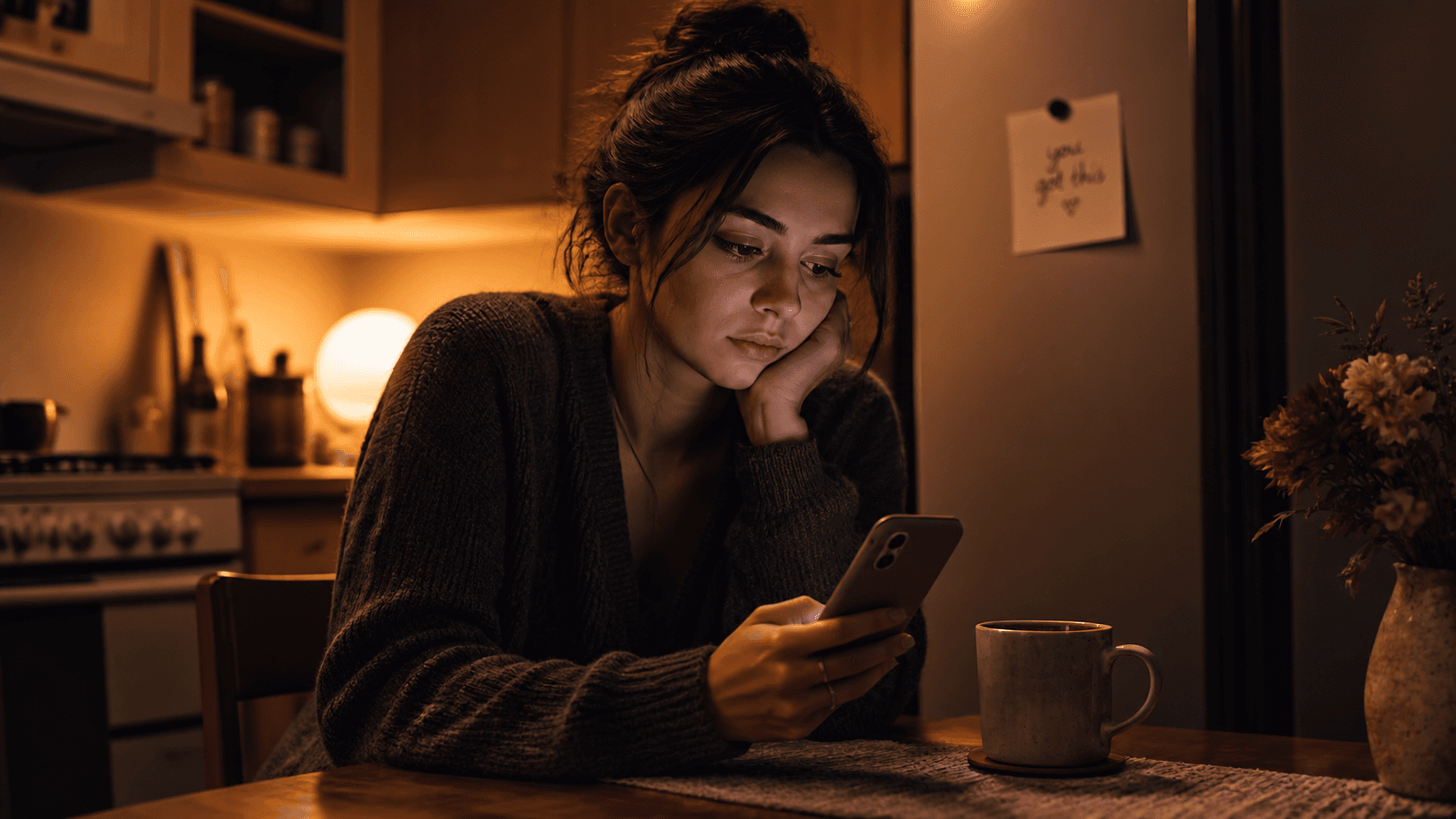
It’s almost midnight, and Nadia’s phone hasn’t stopped.
Her sister needs advice about a work email. Her best friend is spiralling about a date who didn’t reply. A colleague has sent a long voice note about a family argument. Her group chat is in crisis about someone’s ex.
Nadia answers each one carefully. She reassures her sister. She helps her friend reread the date’s last message. She listens to the full voice note and sends something kind.
Then she puts the phone down, looks at the cold tea beside her, and realises nobody has asked how her week was.
Her week was hard.
Being the safe person
If you’re the person people come to, you’ll know this feeling well. You’re the one who listens without judging, who knows what to say, who stays calm when everyone else panics.
People trust you, and that’s a real compliment. You have a gift for making others feel safe.
But being everyone’s safe person can quietly become lonely. You can be surrounded by people and still feel completely unseen.
Why it happens
Ask Nadia when it started, and she might shrug. “I’ve always been like this,” she’d say. “Even as a kid, I was the one people told things to.”
Some people learn early that being helpful is how they belong. Some feel more comfortable giving support than asking for it. Some simply notice other people’s feelings so quickly that they respond before anyone notices theirs.
And many safe people are very good at looking fine. So the people around them genuinely don’t realise anything is wrong.
What astrology sees in the safe person
In astrology, this pattern is often linked to a few placements:
Water Moons (Cancer, Scorpio, Pisces) are often described as highly sensitive to other people’s emotions and naturally nurturing.
A Cancer or Pisces emphasis is often associated with caretaking and emotional generosity.
Planets in the 6th or 12th house are sometimes linked to service, quiet support, or putting others’ needs first.
Virgo placements are often associated with being useful and helping others solve problems.
Capricorn Moon or Saturn links to the Moon are often described as appearing strong and self-sufficient, even when struggling inside.
These placements describe a beautiful capacity for care. The challenge is making sure that care also includes yourself.
The turning point
Imagine Nadia picks up her phone again. This time, she doesn’t open any of the waiting messages. She opens her best friend’s chat and types:
“Hey, I’ve had a really tough week. Could we talk tomorrow? About me, this time?”
Her thumb hovers. It feels strange, almost selfish.
She sends it anyway.
The reply comes in under a minute: “Of course. I’m so sorry, I didn’t realise. Call you at lunch?”
That’s the part many safe people never get to see. Often, people would gladly show up. They just don’t know they’re needed.
How to let people support you too
1. Notice when you’re running on empty. Tiredness, irritability, and resentment are often signs you’ve been giving too much.
2. Ask directly. “Can I tell you something that’s been on my mind?” is a perfectly reasonable request.
3. Stop answering immediately. Not every message needs a reply tonight. Your rest matters too.
4. Let people help in small ways. Accept the offer of a coffee, a lift, or a listening ear, even if you think you can manage.
5. Pay attention to who shows up. Some people will rise to the moment when you finally ask. Those relationships are worth investing in.
6. Remember that needing support doesn’t cancel your strength. The strongest people are often the ones who know when to lean.
Back at the kitchen table
Nadia makes a fresh cup of tea. She leaves the other messages until morning. For the first time in weeks, she goes to bed feeling a little lighter.
Being someone’s safe person is a gift. You deserve a safe person too.
If you’d like to understand how your Moon and chart shape the way you care for others, and how to care for yourself too, an astrologer on My Astrology Advisor can go through it with you by live chat or voice call.